
 News
News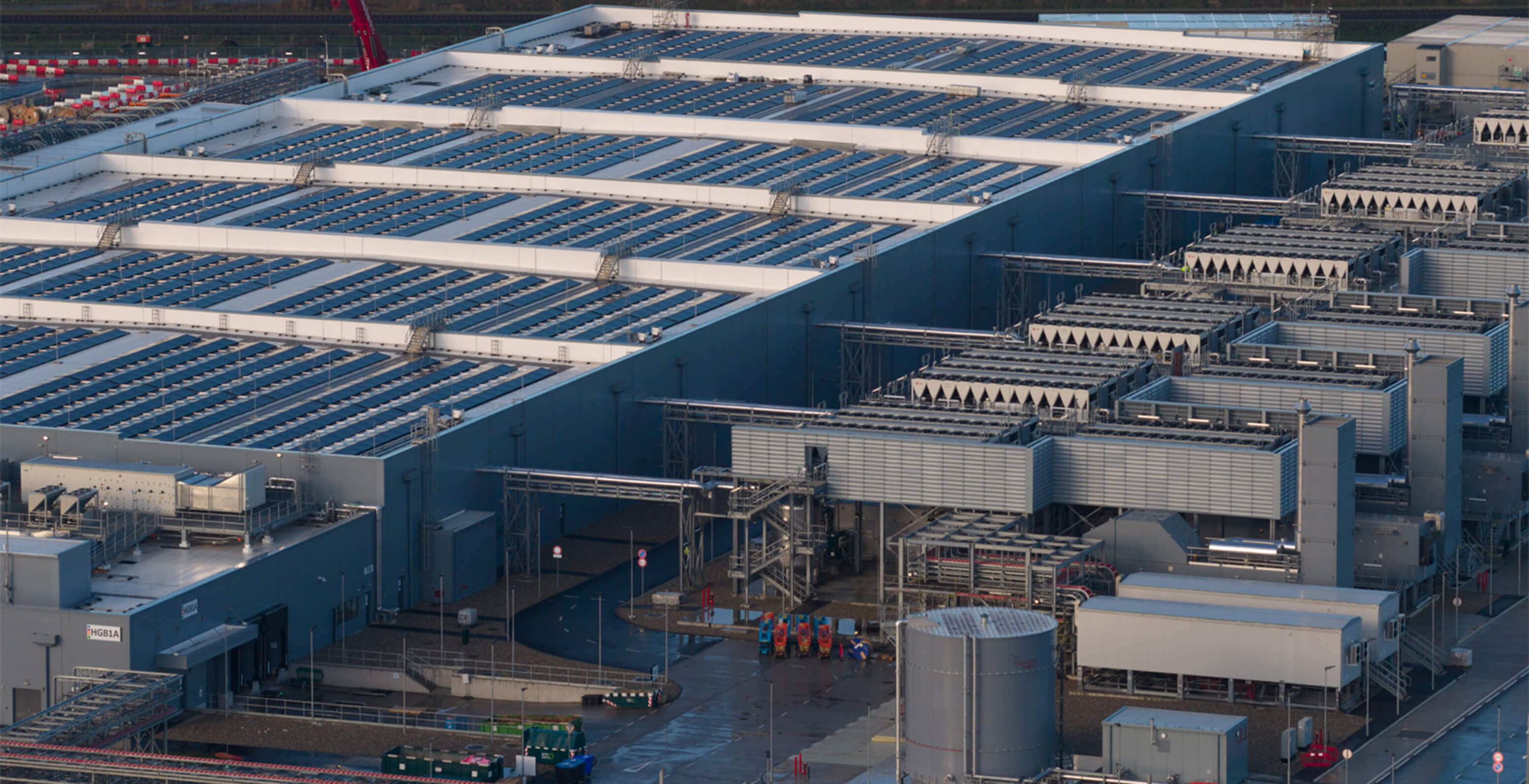
Across the U.S., New York State, and the New York City metropolitan area, proposals to build data centers that power the artificial intelligence boom are colliding with organized public opposition. For example, in the Town of Brookhaven, a report that a large AI data center was planned for Yaphank drew enough backlash that the Brookhaven Town Board recently imposed an 18-month moratorium on such facilities. Residents there and elsewhere have filled hearing rooms to raise concerns about water consumption, noise, strain on the electric grid, and the effect these energy-hungry buildings could have on their utility bills.
With data centers proposed in the Hudson Valley, the Mohawk Valley, the Southern Tier, and Western New York, the New York State Legislature recently passed the Responsible Data Center Development Act (S10642/A11560). The bill imposes a one-year moratorium on state permits for new large data centers with a peak demand of 20 megawatts or more and requires data center developers to provide an environmental impact report and ratepayer protections, as well as comply with new energy efficiency, labor, and transparency standards. The bill is awaiting Governor Kathy Hochul’s signature.
Governor Hochul, however, made news recently when, on July 14, she signed an executive order, the first of its kind in the U.S., temporarily barring New York State from approving permits for data centers that use 50 megawatts or more of power to operate. It’s not clear how her executive order will affect the Responsible Data Center Development Act as currently drafted, but she has said she will continue to consider it.
While New York municipalities can slow down the development of an AI data center below the 50 megawatt threshold of Governor Hochul’s executive order, attach conditions to it, or send it back for further study, the AI horse has left the barn.
Municipalities and those opposing AI data centers cannot make the AI industry disappear or reduce the public’s use of it, any more than they could have wished away other residential, commercial, and industrial uses of land that cause similar public opposition.
AI and the need for AI data centers are not coming; they’re here. These facilities will be built. The questions are where and on what terms. Zoning is a creature of statute, but resolving disputes around controversial projects like AI data centers requires a deft touch from developers and municipalities alike when engaging the public to gain support and reduce opposition. The following practices can help developers and municipalities do so.
Acknowledging that the industry is here to stay
The least productive posture a developer or a town board can adopt is to treat a debate about building an AI data center as a referendum on the merits of AI data centers generally. The more productive conversation is narrower, focusing on siting, design, and mitigation.
Framing the discussion that way shifts the question from whether to allow a project to the terms on which it should be allowed. This mirrors how communities eventually absorbed other once-controversial uses, such as cell towers and large distribution warehouses, which are now unremarkable features of the landscape. It also helps to remember that AI data centers can provide a tax benefit for residents. A data center can provide a long-term addition to the municipal tax base (assuming any tax credits developers receive for building or operating them are temporary), and can create both temporary and full-time (albeit, perhaps limited) construction and operations jobs filled by people who will patronize local businesses, pay sales tax when they do, and potentially pay property taxes.
Investing in a robust environmental review
In New York, development projects are subject to review under the State Environmental Quality Review Act (SEQRA). A developer’s instinct is usually to seek the fastest, least expensive path to satisfying this requirement: a negative declaration, which finds no significant adverse environmental impact and ends the inquiry.
Developers of contentious AI data center projects would be wise to avoid taking this path, especially when the opposition is well-organized and willing to litigate.
The better course of action would be to pursue a full Environmental Impact Statement (EIS), or at least one that is robust enough that little is left unexamined. A thorough environmental review is difficult to overturn in court and also preempts the argument that a project’s impacts were never seriously studied.
The lead agency under SEQRA is typically the local municipal body with primary responsibility for the land use approval required to construct a data center. The developer’s SEQRA consultant typically prepares a draft of the EIS, studying the impacts the municipality has identified as potentially significant, such as traffic, noise, and water, along with those the law requires it to consider. Under recent amendments to the SEQRA regulations adopted by the Department of Environmental Conservation, those requirements have expanded. An Environmental Assessment Form (which helps an agency determine if an EIS is necessary) must now address a project’s greenhouse gas emissions, its exposure to future physical-climate and flood risk, air emissions, and effects on disadvantaged communities—all considerations that bear directly on an energy-intensive use like a data center.
When an EIS is required, a municipality has an independent duty to take a “hard look” at it and exercise its own judgment when doing so (often with the help of its retained experts), provide comments to the developer, ask it to revise the EIS to address its concerns, accept the draft when those concerns are satisfied, and then typically holds a public hearing on it. The final EIS will incorporate responses to the comments raised. Even though a developer pays for and prepares these documents, they legally belong to the municipality. Once a town’s board adopts an EIS, it owns the conclusions in it and cannot later credibly disown them.
Treating mitigation as the goal, not a concession
Members of the public opposed to projects like AI data centers are rarely talked out of their opposition. A developer who sets out to prove the public is wrong will likely succeed only at fanning the flames of discord.
That developer would be wise to concede that impacts exist and proactively show how it will address them. Additional traffic can be mitigated by widening roads and adding or optimizing traffic signals. Noise can be controlled through building design, sound-attenuating materials, insulated walls, and masonry with insulating cores. Water consumption can be managed with closed-loop cooling systems that recycle water rather than continuously draw from the local supply. Developer-funded interconnection upgrades can address concerns about the cost of electricity or strain on the electric grid, as can on-site or behind-the-meter generation, and conditions on electricity usage that protect existing ratepayers.
On Long Island, the water issue is noteworthy because the region draws its drinking water from the aquifer system beneath it.
The U.S. Environmental Protection Agency has designated that system a sole-source aquifer, the only drinking-water supply for the roughly three million people in Nassau and Suffolk counties. The prospect of an AI data center requiring large volumes of fresh water regularly while discharging equally large volumes of heated or contaminated water is no abstract concern.
The premise of SEQRA is not that a project has no impact, but that its adverse environmental impacts, per 6 NYCRR § 617.11(d)(5), “will be avoided or minimized to the maximum extent practicable by incorporating as conditions to the decision those mitigative measures that were identified as practicable.” Developers who come to the table with plans to avoid or minimize adverse environmental impacts negotiate from a stronger position than those who argue there won’t be any impacts to avoid or minimize.
Marshaling credible, independent experts
Beyond what SEQRA requires, developers and municipalities may consider commissioning additional analyses from credible, independent third parties to assuage public concern. Analyses quantifying, for example, projected electricity and water demand may show that opponents’ worst-case scenarios fall below the thresholds that would signal a significant adverse impact. But when there’s one expert, a battle of the experts is likely to follow. Opponents who want to be taken seriously will retain their own consultants, whose reports go into the public record. In a contested data center application, three sets of experts may examine the same questions at once: the developer’s, the municipality’s, and the opposition’s. The party that presents findings from the most credible experts will often gain a credibility advantage in negotiations with opposing parties and in the court of public opinion.
Opening lines of communication
A nontrivial aspect of zoning disputes is how parties’ positions are communicated to one another and to the public. One tool that could benefit all parties to an AI data center zoning dispute is the charrette. A charrette is an open, informational meeting that brings stakeholders together to work through a proposal. This is a genuine exchange, not a rehearsed presentation.
Convening one and using it to correct the misinformation that so often drives these disputes serves developers, municipalities, and the public. For a developer, a public that has genuinely been heard and reassured is a public far less likely to sue. For elected officials, a community that is comfortable with a project carries far less political risk, which makes a favorable vote easier to cast. Members of the public can hear developers and municipalities make their best arguments and receive unfiltered, on-the-spot answers to their concerns. Because both the developer and the municipality can point to an open process, it would be hard to credibly accuse either of imposing its will on a public unable to voice its concerns.
Using a moratorium as a time-out, not a ban
A moratorium, like the one recently imposed by Brookhaven, is among the most useful instruments available to them during a disputed AI data center project. Where a use is large and its impacts are not yet well understood, taking time to study the issue before acting is prudent rather than obstructionist. The key for municipalities is to treat a moratorium as a temporary time-out to identify remaining concerns and decide how to address them, rather than a permanent ban. Moratoriums that are unreasonable or not tied to an ongoing study/investigation of a proposed data center could be re-characterized by developers and a court as a de facto ban or exclusionary zoning.
Likewise, municipalities could have difficulty enacting a categorical, town-wide ban on data center construction projects because a blanket prohibition on an otherwise lawful industrial use could be challenged as exclusionary zoning. Denying a particular application is a different matter, since a municipality’s home-rule authority is broad, a data center is neither a favored nor a protected use, and a municipality is generally under no obligation to create a zoning category for one or to approve any given project. A municipality can lawfully deny data center construction projects on a proper record. A town board that denies a project after studying it carefully stands on far more solid legal and political ground than one that bans the use outright, or that denies an application without a proper record and hopes the public blames the judicial system if a court reverses its decision.
Investing in an engagement strategy from the beginning
These practices reflect a single strategic judgment: When an AI data center development project is vigorously opposed by the public, it usually pays for developers and municipalities to move slowly at the outset in order to move quickly later. If opposition is strong enough, litigation becomes likely, perhaps leading to a lawsuit that ties a project up for years. Measured against that risk, the cost of a thorough environmental review, independent experts, and direct public engagement is modest. A developer who wants to build quickly is often best served, paradoxically, by investing the time to build a record and a constituency that can withstand a challenge.
AI data center development projects are inherently similar, but given the mix of municipalities where they are being planned, the political environments within each, and residents’ varying sentiments toward AI, the strategies that resolve a dispute over one will not map perfectly onto the next. But more often than not, the developers and municipalities that fare best in these disputes will be the ones that treat the public as a party to be engaged rather than an obstacle to be overcome by force.
 Anthony S. Guardino is a partner with Farrell Fritz, P.C., practicing in the areas of land use, zoning and environmental law. He can be reached at aguardino@farrellfritz.com.
Reprinted with permission from the July 28, 2026 edition of The New York Law Journal © 2026 ALM Media Properties, LLC. All rights reserved. Further duplication without permission is prohibited, contact 877-257-3382 or reprints@alm.com.
