
 News
News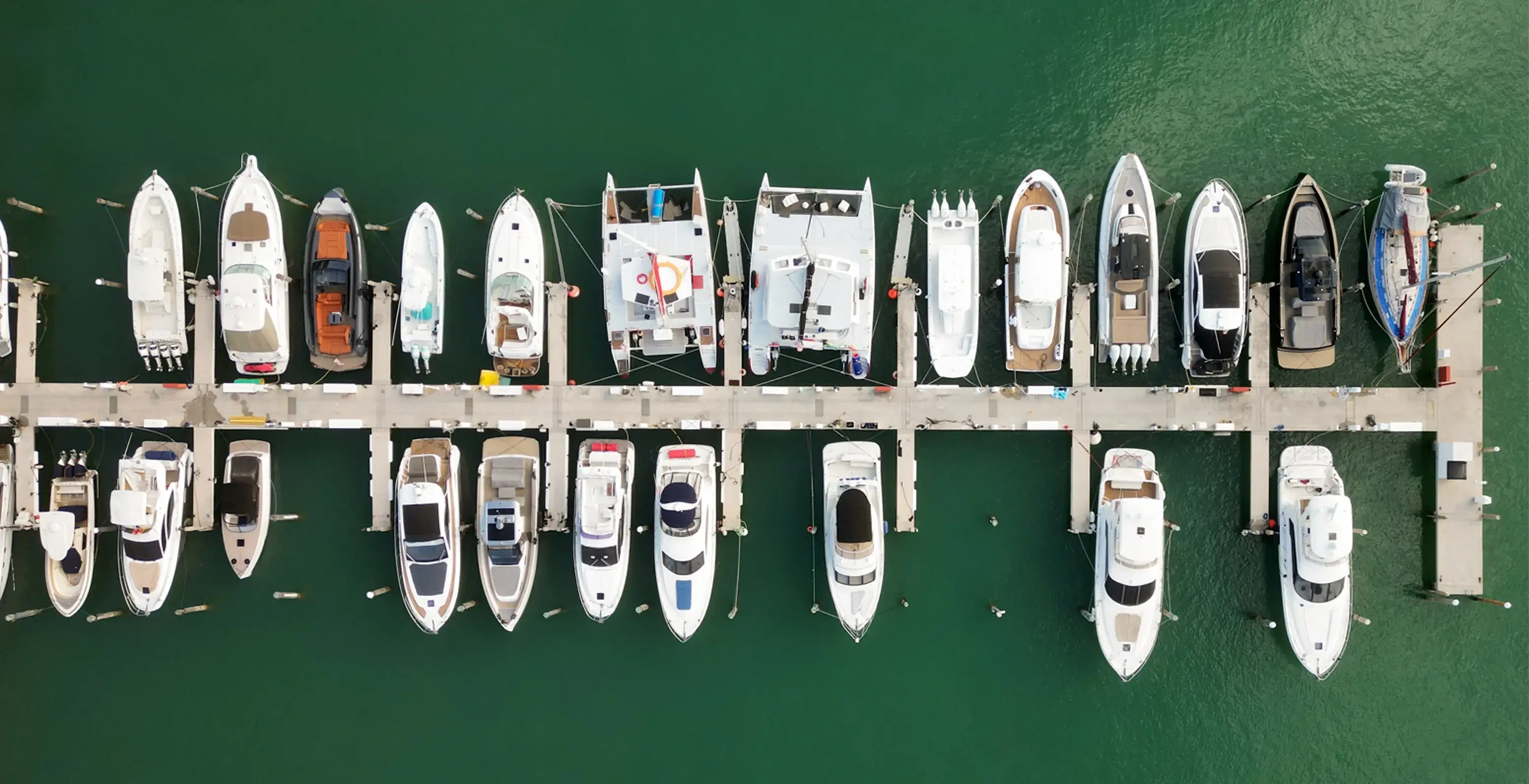
A legal battle is brewing in Southampton, New York, pitting age-old colonial-era patents, acts of the State Legislature, and caselaw concerning riparian rights against local environmental regulation, and more specifically, private landowners against the Southampton Town Board. The battle is over the Town Board’s passage on April 16 of Local Law No. 11 of 2026, a complete dock ban, which states in pertinent part that “no docks utilized for residential purposes shall be permitted” in Little Peconic Bay and Great Peconic Bay.
The Southampton Town Board unanimously approved the measure, citing the need to protect “the environmental and aesthetic resources of the Peconic Bay and its coastal ecosystems by preventing negative impacts such as erosion, habitat destruction and the introduction of invasive species.” Several owners of property along the Great Peconic and Little Peconic Bays insist Southampton has overstepped its jurisdiction and that such a ban requires state legislation. They claim the dock ban curtails an essential riparian right they rely on for boat access and enjoyment of their waterfront property.
Control of Little Peconic Bay and Great Peconic Bay involves a complex interplay between colonial patents, the State, and local governmental powers. A key authority of most municipalities relates to real estate, specifically their rights over land both within and outside their corporate boundaries. Southampton’s dock ban tests the scope of New York municipalities’ regulatory authority and police powers. Whether the ban passes legal muster will likely depend on whether Southampton “owns” the underwater lands of Great Peconic and Little Peconic Bays, whether the ban is a legitimate exercise of Southampton’s police power, and whether the ban is a regulatory taking.
A New York Riparian Rights Primer
In simple terms, New York common law typically protects a property owner’s right to reasonable, safe, and convenient use of the water adjacent to their property for purposes like fishing, swimming, and boating. Thus, generally, in New York, the owners of land bounded by a shoreline, i.e., the upland, are riparian owners and possess riparian rights. E.g., Town of Oyster Bay v Commander Oil Corp., 96 N.Y.2d 566, 571 (2001). Strictly speaking, the owner of land bounded by the sea is a “littoral” owner and the owner of land bounded by a river, lake, or stream is a “riparian” owner, but the term “riparian” is commonly used to describe both. Id. Traditionally, littoral and riparian rights include: (1) the right to access the water from one’s waterfront, (2) the right to reasonably use the water adjacent to one’s property, and (3) the right to make improvements to facilitate access to navigable waters, such as constructing a pier or dock, out to the line of navigability. Id.
That said, a landowner’s riparian rights yield to state and local governments’ legitimate exercises of their police powers to protect the public’s rights. See generally, Town of Hempstead v. Oceanside Yacht Harbor, 38 A.D.2d 263, 264 (2d Dept. 1972), aff’d 32 N.Y.2d 859 (1973). Additionally, New York courts have held that the public has certain rights through that land, which is held in the public trust. Under the public trust doctrine, the state and municipalities hold tidal lands and waters in trust for public uses such as navigation, fishing, and commerce, which limits how those lands may be regulated or used. Tiffany v. Town of Oyster Bay, 234 N.Y. 15 (1922).
Dock Building as an Exercise of Landowners’ Riparian Rights
New York common law treats the riparian right to construct a dock or pier as an extension of the right of access from the upland to the navigable channel, affording the resident-owner practical access to the waters abutting their property. New York courts have long upheld that reasonable dock-building is a natural extension of riparian access rights. Over a century ago, the Court of Appeals in Trustees of Town of Brookhaven v Smith, 188 N.Y. 74 (1907), stated that a waterfront owner’s right of access includes the right to build a pier or “wharf out” to reach navigable water.
A landowner’s use of the water (or of the land under water) must be reasonable in relation to similarly situated owners and the public. For example, a dock’s placement or size that hinders a neighbor’s access or obstructs public navigation could be deemed unreasonable. Reasonable private uses may yield to public interest when a government entity acts to protect public health, safety, and resources. Muraca v Meyerowitz, 13 Misc. 3d 348, 354-55 (Sup. Ct., Nassau County 2006), citing Zalay v Hullets Is. View Marina & Yacht Club, Inc., 148 A.D.2d 772 (3d Dept 1989).
The extent and dimensions of a landowner’s wharfing out must be reasonable and will depend on the specific circumstances of the shoreline and navigation needs. As the Appellate Division noted in Oceanside Yacht Harbor, 38 A.D.2d 263, courts will evaluate the lawful extent of a party’s riparian rights to build dockage on a case-by-case basis, determining whether the landowner is exercising their riparian rights in a reasonable, safe, and convenient manner. Once again, those rights yield to a government’s legitimate exercise of its police power to regulate waterfront structures and uses for public welfare, such as enacting ordinances on dock dimensions, setbacks, or environmental standards. Id.
Long Island’s Colonial Past Creates Unique Jurisdictional Circumstances
The bedrock principle of New York underwater lands law is that the State became the sovereign successor to the English Crown upon independence. New York Public Lands Law §4 declares that all property rights, titles, and interests that vested in the Crown of Great Britain immediately before July 9, 1776—the date New York declared independence—became “vested in the people of this state” from that day forward. However, the riparian rights of Southampton are steeped in Long Island’s distinct colonial history. People v Miller, 235 A.D. 226 (2d Dept. 1932).
In the seventeenth century, royal patents issued by the Duke of York and later the Crown, including the 1676 Andros Patent and the 1686 Dongan Patent, created the “Trustees of the Freeholders and Commonality of the Town of Southampton” and granted Long Island towns title to extensive beaches, tidal waters, and underwater lands, vesting local governments or trustees with control over those areas. That arrangement was later incorporated into New York law and is reflected today in Navigation Law §2(4)’s definition of “[n]avigable waters of the state,” which preserves special authority for Suffolk and Nassau Counties to regulate tidewaters and underwater lands within historic patent limits.
As a result, unlike much of New York, where the state owns most of the navigable waterways, many Long Island towns, such as Southampton, assert jurisdiction over bay bottoms when regulating waterfront structures and claim longstanding proprietary and regulatory authority over adjacent bays and harbors. See, Matter of Malloy v Inc. Village of Sag Harbor, 12 A.D.3d 107 (2d Dept. 2004).
The historical backdrop of the above-referenced royal patents further explains the continued and distinct role of the Trustees of the Freeholders and Commonalty of Town of Southampton (“Trustees”) versus the Southampton Town Board’s zoning jurisdiction in managing docks and moorings. See, People ex rel. Howell v. Jessup, 160 N.Y. 249 (1899); Town of Southampton v. Mecox Bay Oyster Co., 116 N.Y. 1 (1889); Gessin v Throne-Holst, 134 A.D.3d 31 (2d Dept. 2015) (finding in Southampton, the management and regulation of all underwater lands within the Town of Southampton are vested in the Trustees).
Turning to a finer point, the legislative power of a municipality is confined to its territorial limits. Inc. Vil. Of Manorhaven v Ventura Yatch Servs, 166 A.D.2d 685 (2d Dept. 1990). Thus, a municipality is prohibited from exerting jurisdiction over the construction of docks beyond its municipal boundary. See Village of Huntington Bay v. New York Dep’t of Env’t Conservation, 235 A.D.3d 881 (2d Dept. 2025).
In an analogous case, Town of Southold v Parks, 41 Misc. 456 (Sup. Ct., Suffolk Co. 1903, aff’d 97 A.D. 636 (2d Dept. 1904), aff’d 183 N.Y. 513 (1905), the Town of Southold claimed it has title to the whole of the land under the water of Peconic Bay—the same body of water that Southampton’s recently enacted dock ban concerns—by virtue of the colonial patents cited above. The court held otherwise, finding that “[i]t is conceded that no part of [Peconic Bay] in question is included in the patents to the towns of Easthampton, Southampton or Shelter Island . . . .” Thus, the court concluded, if the patent does not convey the Peconic Bay to the Town, then the title thereto was in the State of New York. Id.
What Southampton and Affected Landowners May Argue Regarding the Dock Ban
On its face, Southampton’s residential dock ban raises three legal questions. First, does the town have the authority to ban residential docks in Little Peconic Bay and Great Peconic Bay? Second, if so, is the ban a legitimate exercise of its police power? Third, even if the ban is a valid exercise of police power, does it constitute a regulatory taking requiring just compensation?
As to the first question, both Southampton and property owners have compelling arguments. Southampton invoked Town Law Articles 9 and 16 and Navigation Law Article 3 as authority for its ban, and a New York Department of State memo reportedly opined that towns in Suffolk County have an “implied power” to regulate docks within their waters.
Southampton would likely argue that under colonial-era royal land patents, much of the bottom of Peconic Bay is simply town-owned “property,” giving it jurisdiction to ban docks anchored therein.
In 1899, the Court of Appeals in People ex rel. Howell v. Jessup, 160 N.Y. 249, found that the 1676 Andros Patent and the 1686 Dongan Patent, respectively, granted Southampton’s freeholders and inhabitants all lands, waters, and appurtenances within the town’s bounds, and confirmed to the Town of Southampton all “swamps, rivers, riverlets, waters, lakes, ponds, brooks, streams, beaches, creeks, harbors, highways, easements, fishing, and all other franchises.”
The latter patent authorized the Trustees of Southampton’s Freeholders to “perform such acts and to make such orders as they might see fit” when managing the waters for public benefit.
This framework has been upheld as recently as 2022 by the Appellate Division, Second Department in Brookhaven Baymen’s Association, Inc. v. Town of Southampton, 201 A.D.3d 856. There, the court held that the Trustees of the Freeholders and Commonalty of the Town of Southampton, as title owners to the underwater lands in the town under the 1686 Patent, could properly exclude nonresidents from commercially fishing on the bay bottom when such fishing constituted a trespass on underwater lands by placing fishing gear on the bay bottom.
Opponents of the ban would point to two court opinions suggesting that Southampton does not own the land beneath Little Peconic Bay and Great Peconic Bay, and thus has no authority to prohibit residential docks. In 2010, the Appellate Division, Second Department in Sharkey v. Town of Southold Justice Court, 71 A.D.3d 1030, noted that the 1676 Patent “included neither the underwater lands below the high water mark of Peconic Bay nor its harbors and inlets,” thus it appeared that the State of New York owned Peconic Bay and not Southold.
Additionally, opponents of the ban would likely point to Town of Southold v. Parks, et al., 41 Misc. 456, mentioned above, which held that, based on the language of the November 1676 patent, the south boundary of the patent was the “high-water mark on the north side of Peconic and Gardiner Bays, following the line of high-water mark of Peconic Bay around to Red creek,” and that no part of Peconic Bay was included in the patents to Southampton. If relying on this decision, opponents would need to reconcile it with Brookhaven Baymen’s Association.
The second legal question, regarding whether the ban is a legitimate exercise of Southampton’s police power, would likely be an inquiry into Southampton’s reasons for enacting the ban: to protect “the environmental and aesthetic resources of the Peconic Bay and its coastal ecosystems by preventing negative impacts such as erosion, habitat destruction and the introduction of invasive species.” While such concerns are likely to be deemed legitimate exercises of police power, if there is no factual basis for such concerns, Southampton might have an uphill battle convincing a court or jury to uphold the ban. Especially since the ban denies landowners the ability to construct a dock, a hallmark riparian right.
Relatedly, even if the ban survives the police-power inquiry, landowners could argue that it effects a regulatory taking under Penn Central Transportation Co. v. City of New York, 438 U.S. 104 (1978), or a categorial taking under Lucas v. South Carolina Coastal Council, 505 U.S. 1003 (1992), that eliminates all economically beneficial use of their recognized property rights.
Southampton might find support for its “legitimate exercise” argument in Stutchin v. Town of Huntington, 71 F. Supp. 2d 76 (E.D.N.Y. 1999). Critically, in that case, the Village of Lloyd Harbor relied on its Local Waterfront Revitalization Plan (“LWRP”) to limit the length of docks in Lloyd Harbor to seventy-five (75) feet seaward. The plaintiffs challenged the denial of their application for a permit to construct a 115-foot dock under 42 U.S.C. §1983, alleging that the codes were unconstitutional and that the denial constituted a regulatory taking.
In granting the defendants’ summary judgment motion, the court found the plaintiffs’ claims were not ripe. However, to complete the record, the court held, regarding the plaintiffs’ substantive due process claim, that (1) the plaintiffs had not been denied their riparian rights of access to the bay, but “they merely have had their mode of access limited to a dingy [sic] launched from the foreshore of their property,” and (2) Lloyd Harbor and Huntington had a “substantial rational basis” for reducing the size of docks based on preventing obstruction of navigation, preserving the “pristine natural habitat and precious resources of Lloyd Harbor,” and aesthetics.
If Southampton can show that its dock ban merely limited landowners’ mode of access to Peconic Bay, and that protecting the environmental and aesthetic resources of the Peconic Bay and its coastal ecosystems was a substantial rational basis for the ban, it may prevail in a legal challenge to the ban. However, Stutchin addressed length restrictions on docks and the Village’s LWRP rather than a complete ban. A court may distinguish Stutchin on that basis, viewing the ban as an elimination of a riparian right rather than merely a regulation of it.
Will Southampton’s Dock Ban Stay Afloat?
Southampton’s dock ban is the latest chapter in a continuing push-and-pull between private riparian rights and public regulatory goals. For centuries, New York law has recognized that waterfront landowners enjoy special rights of access to adjacent bodies of water, but also that these rights are subject to governments’ legitimate use of their police powers. Ultimately, how Southampton’s dock ban fares in court will provide guidance on how far local governments can go in preserving coastal resources without extinguishing the riparian rights of waterfront property owners.
 John C. Armentano is a partner with Farrell Fritz in the firm’s Hauppauge, Long Island office. He practices in the areas of land use, zoning, and municipal law. He can be reached at jcarmentano@farrellfritz.com.
Reprinted with permission from the May 28, 2026 edition of The New York Law Journal © 2026 ALM Media Properties, LLC. All rights reserved. Further duplication without permission is prohibited, contact 877-257-3382 or reprints@alm.com.
